WeWake in Real Life
WeWake in Real Life
WeWake in Real Life
WeWake in Real Life
WeWake in Real Life
Product
Product
Everyone talks about crypto adoption.
But adoption doesn’t come from better consensus or faster finality. It comes from a person using a product and not realizing there’s a blockchain behind it.
We’re not building another L2 for people who already live on-chain. We’re building infrastructure where the user never touches a wallet, never pays gas, and never writes down a seed phrase.
Here are seven things people try to do with crypto today — and fail. And what changes when you build the experience differently.
A freelancer gets paid in USDT
Maria designs logos in Buenos Aires. Her client in Berlin pays in USDT. Simple enough.
Except the client sends on Ethereum mainnet. Maria’s wallet is on Arbitrum. Now she needs to bridge. To bridge she needs ETH. She doesn’t have ETH. She buys some, sends it, waits, bridges, waits again. 40 minutes. $12 gone.
Next month the client picks Polygon by accident. Maria spends her evening googling how to bridge between two networks she didn’t choose.
On WeWake, Maria logs in with Google. Smart account created. Client sends USDT on L2. Maria sees it. Withdraws. No wallet. No gas. 30 seconds.
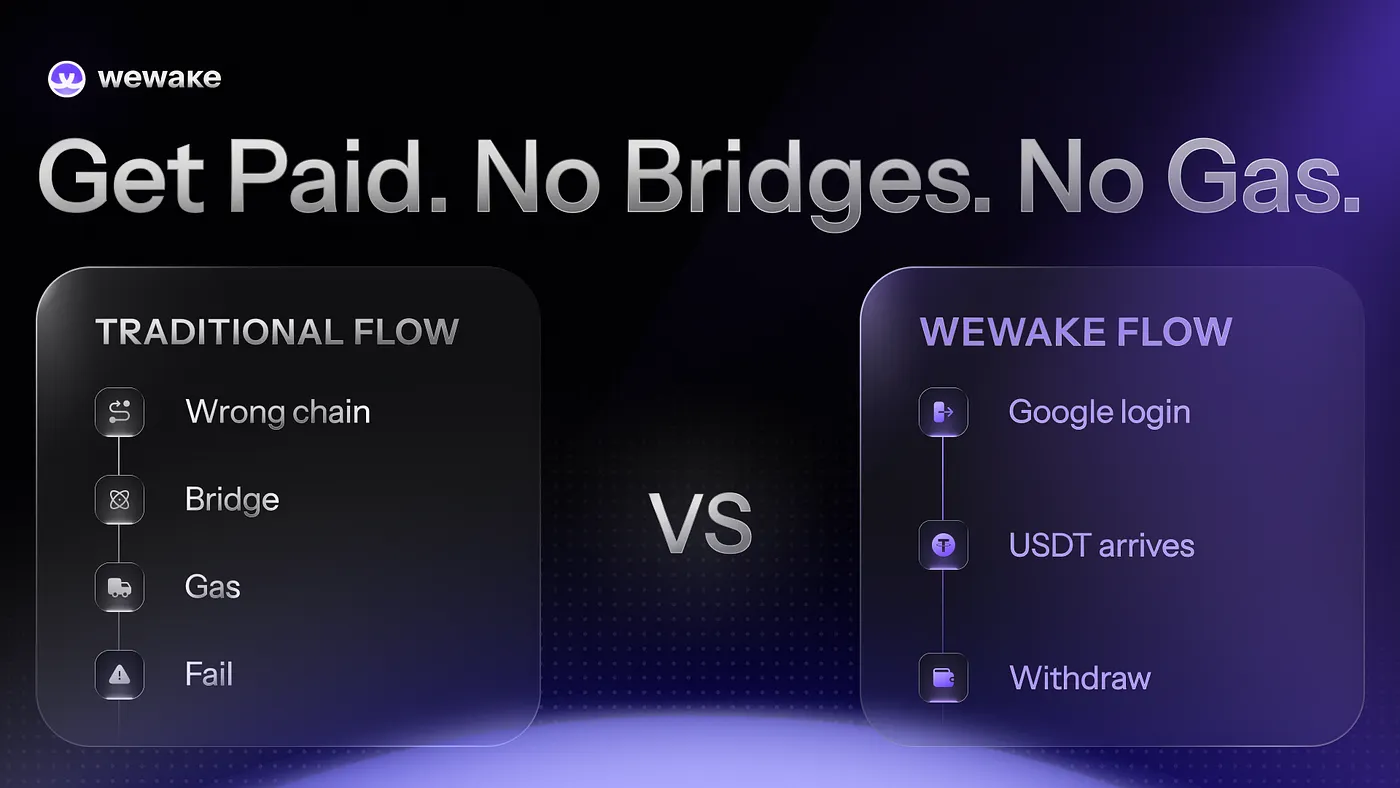
The complexity didn’t vanish — it moved to infrastructure where it belongs.
A Telegram bot for DeFi
Alex built a trading bot. Users connect wallets, approve tokens, sign every action. Half of them don’t understand what they’re signing. Some bots are drainers — and there’s no way to tell until it’s too late.
The trust model is broken. Either give unlimited access or sign every click. No middle ground.
On WeWake, the bot requests a session key. Scoped to specific contracts. $50/day cap. Expires in 24 hours. User taps “Go” once. Bot handles the rest.
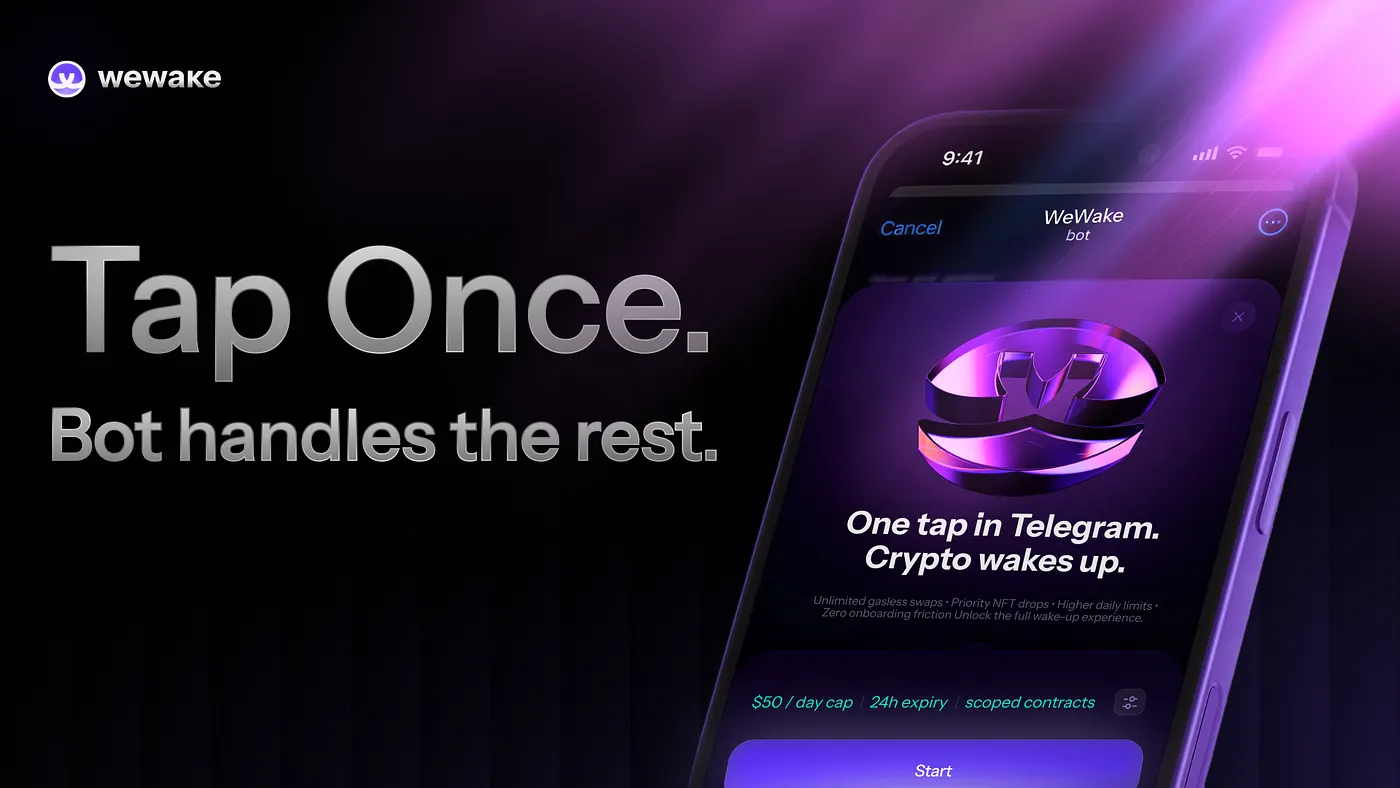
If the bot tries anything outside the policy, the smart account rejects it. No private key leaves the device. The session key is disposable. Revoke anytime.
An NFT drop with 50,000 people
A project launches a collection. 50,000 people show up. Gas spikes to $80. Half the mints fail. Users who paid for failed transactions get nothing back. Support gets 3,000 tickets. The drop that was supposed to build hype becomes a disaster.
On WeWake, Paymaster sponsors gas. Smart accounts batch the mint. Users click one button. 50,000 mints. Zero gas prompts. Zero failed transactions.
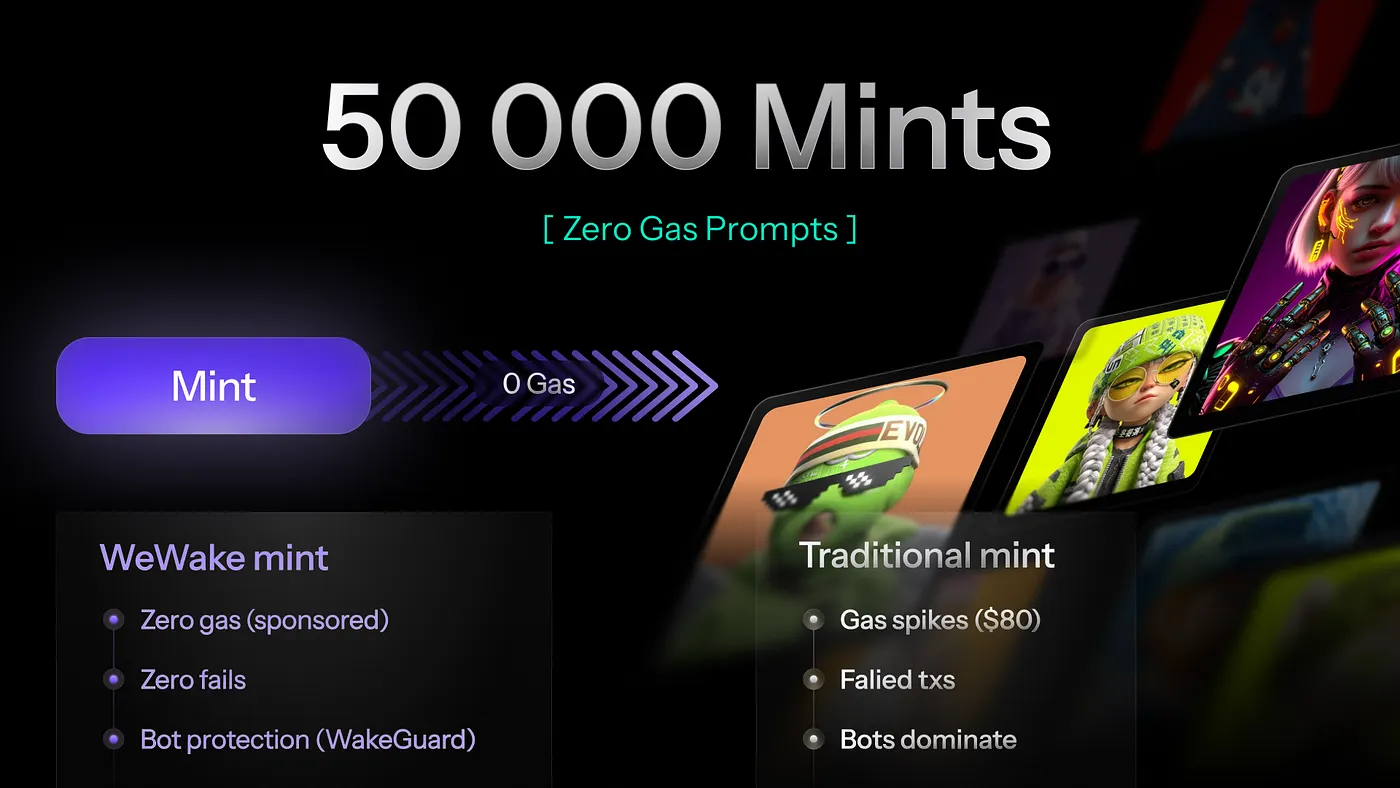
WakeGuard scores each request. Bots get flagged before they burn sponsor budget. The project pays for humans, not farms.
A mobile game with in-app purchases
A studio builds an on-chain game. First screen: “Please install MetaMask.” 95% of players close the tab. The 5% who stay hit a gas fee on their first purchase. Half leave. Great game, no players.
The problem isn’t the game. It’s the onboarding.
On WeWake, the player signs in with Google. Session key covers all in-game actions — 10 WAKE per hour, game contracts only, expires in 24 hours.
Three hours of play. No popups. No gas. No signing. The studio pays via Paymaster and knows exactly what each session costs.
Retention goes up because the game just works.
E-commerce checkout
An online store adds “Pay with crypto.” Customer clicks. Connect wallet. Switch to Polygon. Approve USDC. Confirm. Wait. Six steps. Most abandon at step two.
On WeWake, the SDK sits in the checkout. Customer sees “Pay with USDC” next to “Pay with card.” One click. Account created if needed. Paymaster covers the fee. Merchant gets settlement. Customer gets cashback in WAKE.
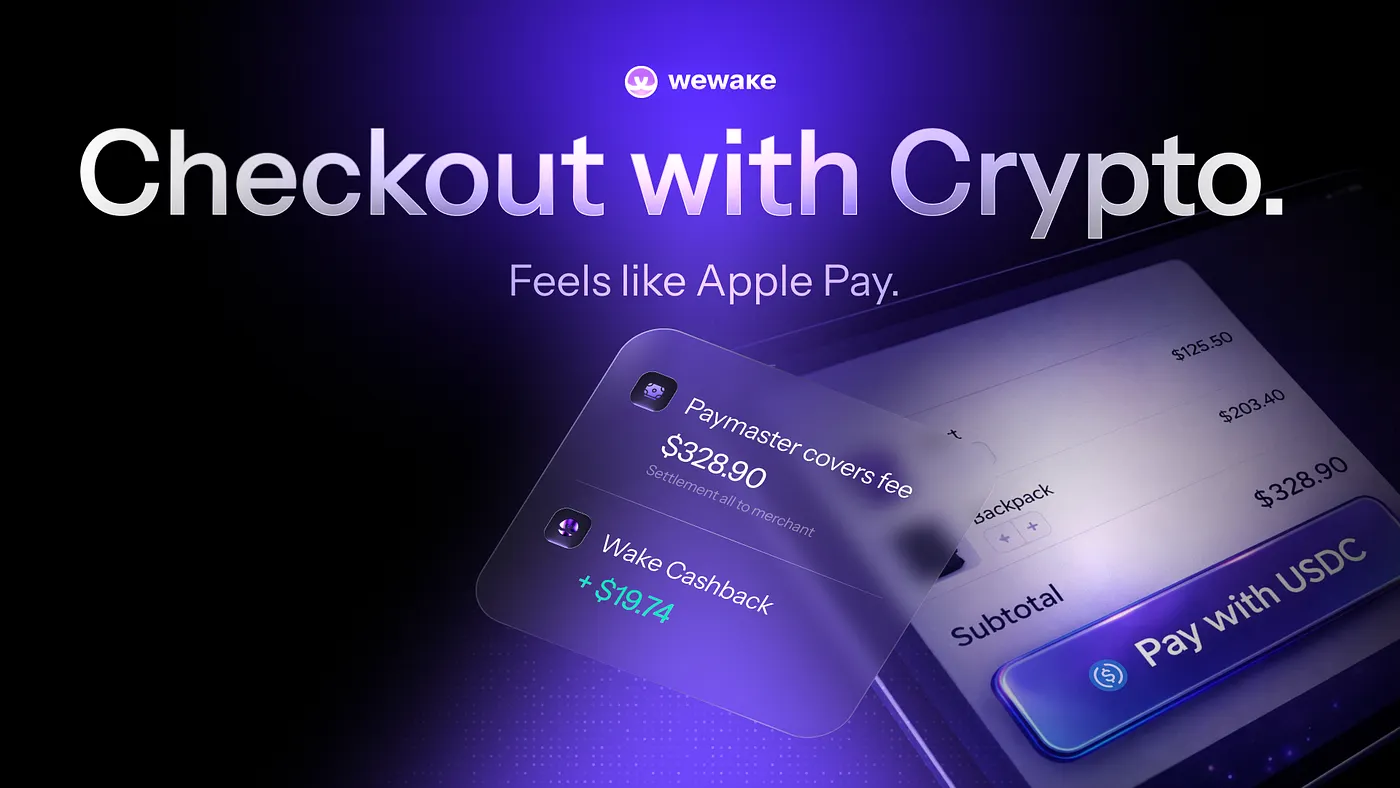
Feels like Apple Pay. Runs on Ethereum.
DAO voting
100,000 token holders. Important governance vote. But voting costs gas. For someone holding $200 worth of tokens, a $3 fee isn’t worth it.
Result: 5% participation. Whales decide everything. The “decentralized” part is branding.
On WeWake, Paymaster sponsors governance actions. Every holder votes for free. Participation hits 40%. Proposals represent the actual community.
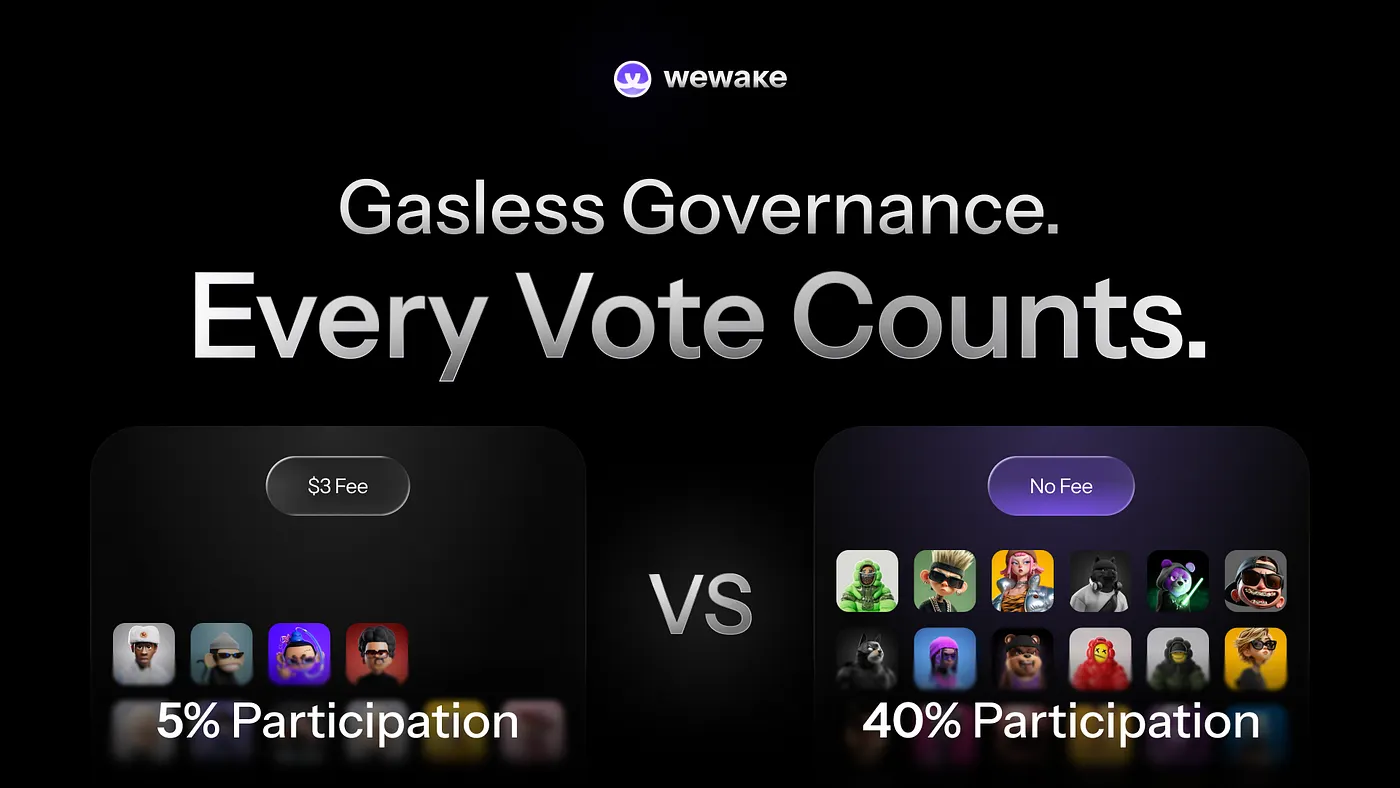
Cost to the DAO: a few hundred dollars in gas. Return: decisions that have legitimacy.
Airdrop claims
You qualify for an airdrop. Now: connect wallet. Switch network. Have gas. Approve. Claim. Bridge. Seven steps for $40 in tokens.
And half the recipients are farmers with 50 wallets each.
On WeWake, you get a link. Tap it. Account created. Merkle proof verifies eligibility. Tokens go into a vesting schedule on-chain. You installed nothing. Paid nothing.
WakeGuard filters bots before they reach the Paymaster. The project pays for real users.
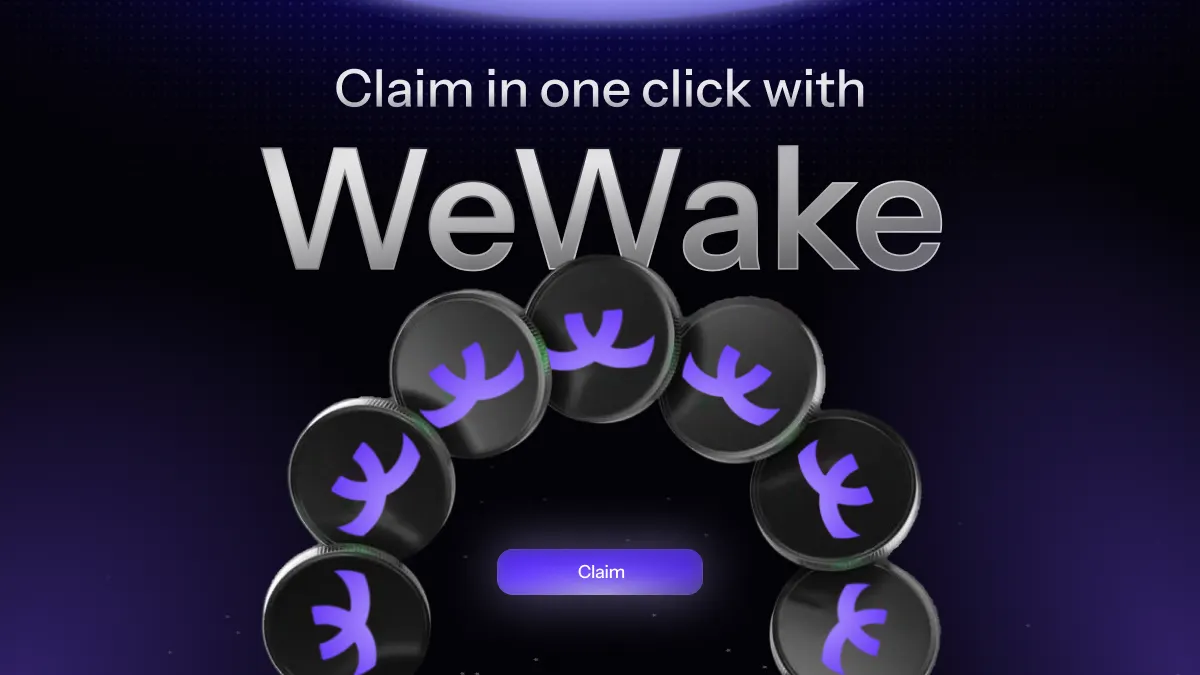
One link. One tap. Claimed.
The pattern
Every scenario has the same shape.
Today, the user fights the infrastructure. Steps. Errors. Fees. Tools that feel like they were built for developers, not people.
On WeWake, the infrastructure handles itself. Smart accounts, Paymasters, and session keys absorb the complexity. The user does the thing they came to do.
That’s what adoption actually looks like. Products that work like normal products.
The blockchain disappears. The experience stays.
That’s what we’re building.
Everyone talks about crypto adoption.
But adoption doesn’t come from better consensus or faster finality. It comes from a person using a product and not realizing there’s a blockchain behind it.
We’re not building another L2 for people who already live on-chain. We’re building infrastructure where the user never touches a wallet, never pays gas, and never writes down a seed phrase.
Here are seven things people try to do with crypto today — and fail. And what changes when you build the experience differently.
A freelancer gets paid in USDT
Maria designs logos in Buenos Aires. Her client in Berlin pays in USDT. Simple enough.
Except the client sends on Ethereum mainnet. Maria’s wallet is on Arbitrum. Now she needs to bridge. To bridge she needs ETH. She doesn’t have ETH. She buys some, sends it, waits, bridges, waits again. 40 minutes. $12 gone.
Next month the client picks Polygon by accident. Maria spends her evening googling how to bridge between two networks she didn’t choose.
On WeWake, Maria logs in with Google. Smart account created. Client sends USDT on L2. Maria sees it. Withdraws. No wallet. No gas. 30 seconds.
The complexity didn’t vanish — it moved to infrastructure where it belongs.
A Telegram bot for DeFi
Alex built a trading bot. Users connect wallets, approve tokens, sign every action. Half of them don’t understand what they’re signing. Some bots are drainers — and there’s no way to tell until it’s too late.
The trust model is broken. Either give unlimited access or sign every click. No middle ground.
On WeWake, the bot requests a session key. Scoped to specific contracts. $50/day cap. Expires in 24 hours. User taps “Go” once. Bot handles the rest.
If the bot tries anything outside the policy, the smart account rejects it. No private key leaves the device. The session key is disposable. Revoke anytime.
An NFT drop with 50,000 people
A project launches a collection. 50,000 people show up. Gas spikes to $80. Half the mints fail. Users who paid for failed transactions get nothing back. Support gets 3,000 tickets. The drop that was supposed to build hype becomes a disaster.
On WeWake, Paymaster sponsors gas. Smart accounts batch the mint. Users click one button. 50,000 mints. Zero gas prompts. Zero failed transactions.
WakeGuard scores each request. Bots get flagged before they burn sponsor budget. The project pays for humans, not farms.
A mobile game with in-app purchases
A studio builds an on-chain game. First screen: “Please install MetaMask.” 95% of players close the tab. The 5% who stay hit a gas fee on their first purchase. Half leave. Great game, no players.
The problem isn’t the game. It’s the onboarding.
On WeWake, the player signs in with Google. Session key covers all in-game actions — 10 WAKE per hour, game contracts only, expires in 24 hours.
Three hours of play. No popups. No gas. No signing. The studio pays via Paymaster and knows exactly what each session costs.
Retention goes up because the game just works.
E-commerce checkout
An online store adds “Pay with crypto.” Customer clicks. Connect wallet. Switch to Polygon. Approve USDC. Confirm. Wait. Six steps. Most abandon at step two.
On WeWake, the SDK sits in the checkout. Customer sees “Pay with USDC” next to “Pay with card.” One click. Account created if needed. Paymaster covers the fee. Merchant gets settlement. Customer gets cashback in WAKE.
Feels like Apple Pay. Runs on Ethereum.
DAO voting
100,000 token holders. Important governance vote. But voting costs gas. For someone holding $200 worth of tokens, a $3 fee isn’t worth it.
Result: 5% participation. Whales decide everything. The “decentralized” part is branding.
On WeWake, Paymaster sponsors governance actions. Every holder votes for free. Participation hits 40%. Proposals represent the actual community.
Cost to the DAO: a few hundred dollars in gas. Return: decisions that have legitimacy.
Airdrop claims
You qualify for an airdrop. Now: connect wallet. Switch network. Have gas. Approve. Claim. Bridge. Seven steps for $40 in tokens.
And half the recipients are farmers with 50 wallets each.
On WeWake, you get a link. Tap it. Account created. Merkle proof verifies eligibility. Tokens go into a vesting schedule on-chain. You installed nothing. Paid nothing.
WakeGuard filters bots before they reach the Paymaster. The project pays for real users.
One link. One tap. Claimed.
The pattern
Every scenario has the same shape.
Today, the user fights the infrastructure. Steps. Errors. Fees. Tools that feel like they were built for developers, not people.
On WeWake, the infrastructure handles itself. Smart accounts, Paymasters, and session keys absorb the complexity. The user does the thing they came to do.
That’s what adoption actually looks like. Products that work like normal products.
The blockchain disappears. The experience stays.
That’s what we’re building.
Everyone talks about crypto adoption.
But adoption doesn’t come from better consensus or faster finality. It comes from a person using a product and not realizing there’s a blockchain behind it.
We’re not building another L2 for people who already live on-chain. We’re building infrastructure where the user never touches a wallet, never pays gas, and never writes down a seed phrase.
Here are seven things people try to do with crypto today — and fail. And what changes when you build the experience differently.
A freelancer gets paid in USDT
Maria designs logos in Buenos Aires. Her client in Berlin pays in USDT. Simple enough.
Except the client sends on Ethereum mainnet. Maria’s wallet is on Arbitrum. Now she needs to bridge. To bridge she needs ETH. She doesn’t have ETH. She buys some, sends it, waits, bridges, waits again. 40 minutes. $12 gone.
Next month the client picks Polygon by accident. Maria spends her evening googling how to bridge between two networks she didn’t choose.
On WeWake, Maria logs in with Google. Smart account created. Client sends USDT on L2. Maria sees it. Withdraws. No wallet. No gas. 30 seconds.
The complexity didn’t vanish — it moved to infrastructure where it belongs.
A Telegram bot for DeFi
Alex built a trading bot. Users connect wallets, approve tokens, sign every action. Half of them don’t understand what they’re signing. Some bots are drainers — and there’s no way to tell until it’s too late.
The trust model is broken. Either give unlimited access or sign every click. No middle ground.
On WeWake, the bot requests a session key. Scoped to specific contracts. $50/day cap. Expires in 24 hours. User taps “Go” once. Bot handles the rest.
If the bot tries anything outside the policy, the smart account rejects it. No private key leaves the device. The session key is disposable. Revoke anytime.
An NFT drop with 50,000 people
A project launches a collection. 50,000 people show up. Gas spikes to $80. Half the mints fail. Users who paid for failed transactions get nothing back. Support gets 3,000 tickets. The drop that was supposed to build hype becomes a disaster.
On WeWake, Paymaster sponsors gas. Smart accounts batch the mint. Users click one button. 50,000 mints. Zero gas prompts. Zero failed transactions.
WakeGuard scores each request. Bots get flagged before they burn sponsor budget. The project pays for humans, not farms.
A mobile game with in-app purchases
A studio builds an on-chain game. First screen: “Please install MetaMask.” 95% of players close the tab. The 5% who stay hit a gas fee on their first purchase. Half leave. Great game, no players.
The problem isn’t the game. It’s the onboarding.
On WeWake, the player signs in with Google. Session key covers all in-game actions — 10 WAKE per hour, game contracts only, expires in 24 hours.
Three hours of play. No popups. No gas. No signing. The studio pays via Paymaster and knows exactly what each session costs.
Retention goes up because the game just works.
E-commerce checkout
An online store adds “Pay with crypto.” Customer clicks. Connect wallet. Switch to Polygon. Approve USDC. Confirm. Wait. Six steps. Most abandon at step two.
On WeWake, the SDK sits in the checkout. Customer sees “Pay with USDC” next to “Pay with card.” One click. Account created if needed. Paymaster covers the fee. Merchant gets settlement. Customer gets cashback in WAKE.
Feels like Apple Pay. Runs on Ethereum.
DAO voting
100,000 token holders. Important governance vote. But voting costs gas. For someone holding $200 worth of tokens, a $3 fee isn’t worth it.
Result: 5% participation. Whales decide everything. The “decentralized” part is branding.
On WeWake, Paymaster sponsors governance actions. Every holder votes for free. Participation hits 40%. Proposals represent the actual community.
Cost to the DAO: a few hundred dollars in gas. Return: decisions that have legitimacy.
Airdrop claims
You qualify for an airdrop. Now: connect wallet. Switch network. Have gas. Approve. Claim. Bridge. Seven steps for $40 in tokens.
And half the recipients are farmers with 50 wallets each.
On WeWake, you get a link. Tap it. Account created. Merkle proof verifies eligibility. Tokens go into a vesting schedule on-chain. You installed nothing. Paid nothing.
WakeGuard filters bots before they reach the Paymaster. The project pays for real users.
One link. One tap. Claimed.
The pattern
Every scenario has the same shape.
Today, the user fights the infrastructure. Steps. Errors. Fees. Tools that feel like they were built for developers, not people.
On WeWake, the infrastructure handles itself. Smart accounts, Paymasters, and session keys absorb the complexity. The user does the thing they came to do.
That’s what adoption actually looks like. Products that work like normal products.
The blockchain disappears. The experience stays.
That’s what we’re building.
How to share your referral link like a PRO
How to share your referral link like a PRO
At WeWake, every user gets a referral link that pays 15% in WAKE on every qualifying purchase made through it. no cap. no expiry. no tiers to unlock. just share, and earn.
At WeWake, every user gets a referral link that pays 15% in WAKE on every qualifying purchase made through it. no cap. no expiry. no tiers to unlock. just share, and earn.
Community
Product
How to Join Presale & Stake $WAKE
How to Join Presale & Stake $WAKE
Most presale tokens give you one thing: hope. You buy, you wait, you check the price every day. Maybe it lists. Maybe it doesn’t. Either way, your tokens just sit there — and you can’t do anything...
Most presale tokens give you one thing: hope. You buy, you wait, you check the price every day. Maybe it lists. Maybe it doesn’t. Either way, your tokens just sit there — and you can’t do anything...
Update
Product
You Don’t Need a Seed Phrase — Here’s Why That’s Safe
You Don’t Need a Seed Phrase — Here’s Why That’s Safe
The setup takes 30 seconds. You get random words. You decide how to store them. And that decision is permanent. No reset. No support. No second chance.
The setup takes 30 seconds. You get random words. You decide how to store them. And that decision is permanent. No reset. No support. No second chance.
Education
Product
How to share your referral link like a PRO
At WeWake, every user gets a referral link that pays 15% in WAKE on every qualifying purchase made through it. no cap. no expiry. no tiers to unlock. just share, and earn.
Community
Product
How to Join Presale & Stake $WAKE
Most presale tokens give you one thing: hope. You buy, you wait, you check the price every day. Maybe it lists. Maybe it doesn’t. Either way, your tokens just sit there — and you can’t do anything...
Update
Product
©2026 WeWAKE • Designed to help users move from holding assets to earning.
WeWake provides infrastructure and tools, not investment advice.
©2026 WeWAKE • Designed to help users move from holding assets to earning.
WeWake provides infrastructure and tools, not investment advice.
©2026 WeWAKE • Designed to help users move from holding assets to earning.
WeWake provides infrastructure and tools,
not investment advice.
Product
Company
Resources
Product
Company
Resources